

one hundred years of decade-defining drinks
From the sweet concoctions that masked poor-quality gin in the 1920s to the rise of the three-martini lunch in the 1950s to the indulgent excess of the 1980s that gave us the Long Island Iced Tea, each decade is defined by a signature cocktail that reflects the culture of its era.
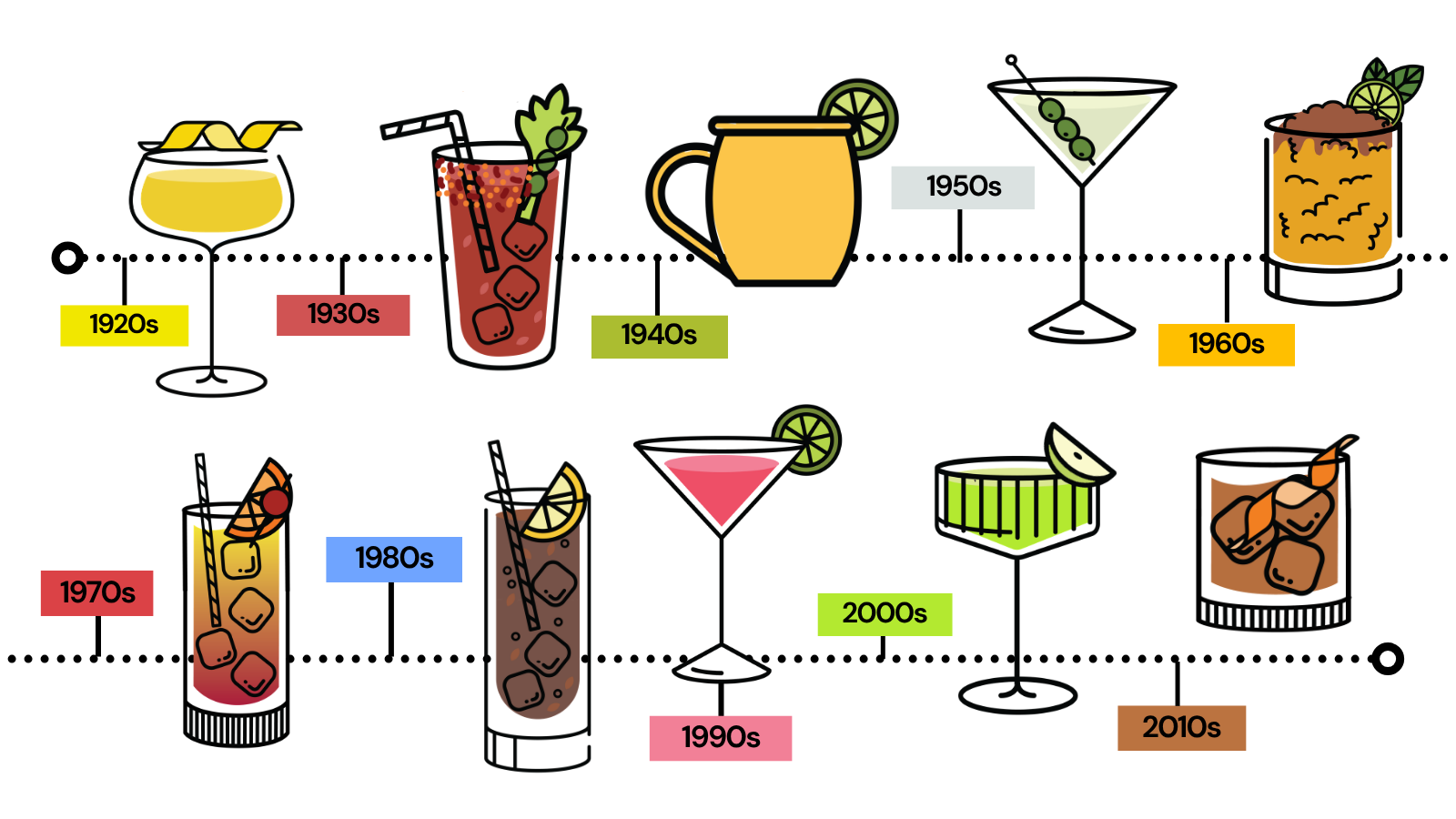
bee’s knees
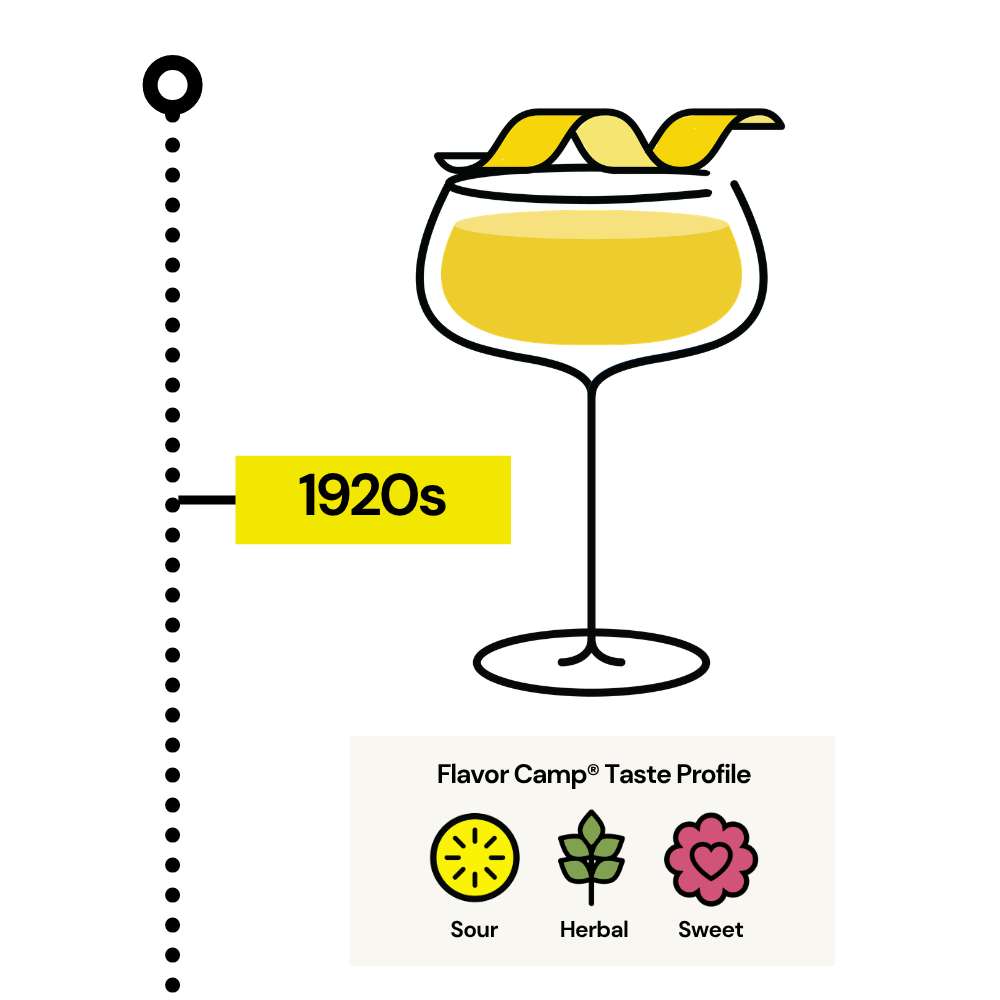
The Bee’s Knees is a quintessential Prohibition-era cocktail, born in the 1920s when bartenders masked the harshness of bad gin with sweeteners and citrus. Honey didn’t just add a touch of sweetness; it also mellowed the bite of rough spirits. The name itself is pure Jazz Age slang: “the bee’s knees” meant something truly exceptional or stylish. This cocktail’s history is a testament to Prohibition, creative improvisation, and turning necessity into style.
Recipe:
2.0 oz london dry gin
0.75 oz fresh lemon juice
0.75 oz honey syrup (1:1)
garnish: lemon twist
Shake with ice. Fine strain into a chilled coupe & garnish.
bloody mary
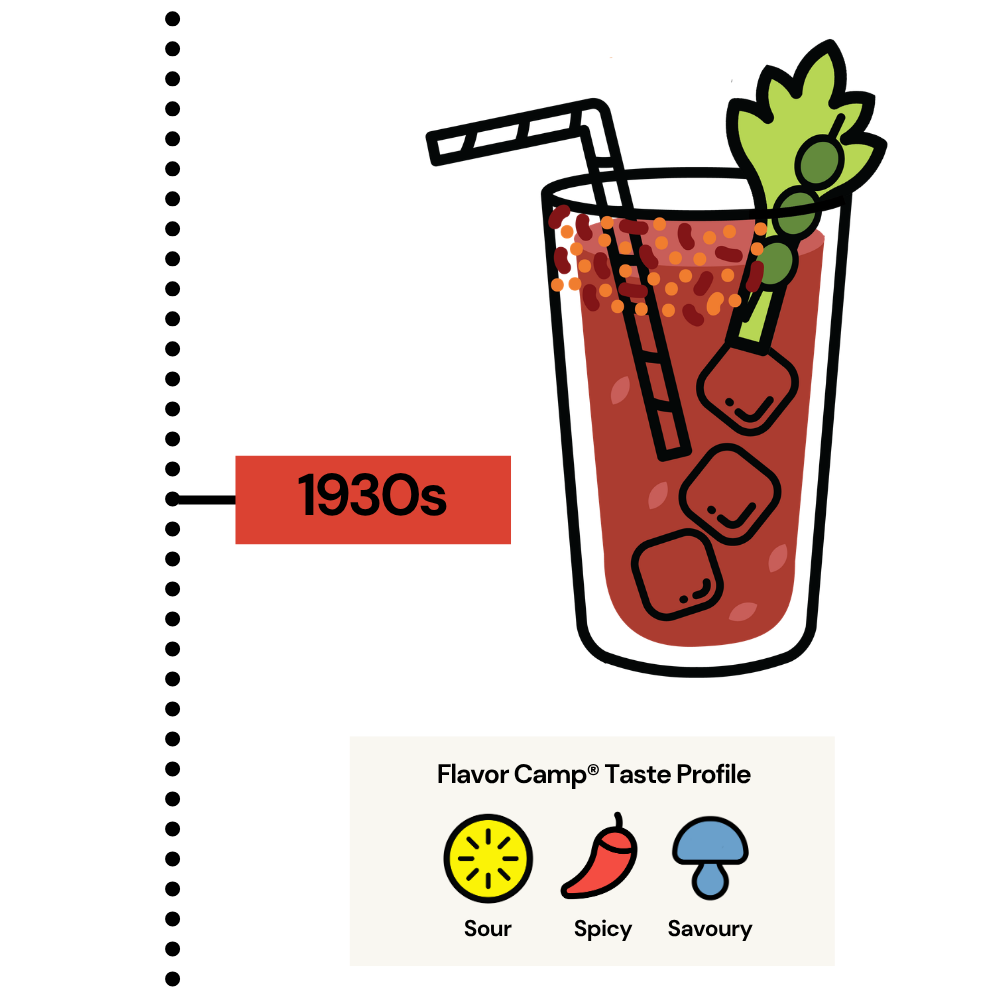
The origins of the Bloody Mary are murky, but the cocktail became a staple in the 1930s. Fernand “Pete” Petiot, who honed the recipe at Harry’s New York Bar in Paris and later at New York’s King Cole Bar, is often credited with perfecting the drink. The Bloody Mary became emblematic of the 1930s, driven by the growing popularity of hotel bars, the rise of brunch, and a shift toward sophisticated daytime drinking. Unlike the sweet, spirit-forward cocktails of earlier decades, its savoury profile marked a refreshing shift, making it a breakfast companion or the perfect hangover remedy.
Recipe:
1.5 oz vodka
4.0 oz tomato juice
0.5 oz fresh lemon juice
3 dashes worcestershire sauce
2 dashes tabasco
1 pinch black pepper
2 tsp prepared horseradish
garnish: celery salt rim & accoutrements
Build directly in a glass rimmed with celery salt over ice. Stir to incorporate & garnish extravagantly.
moscow mule
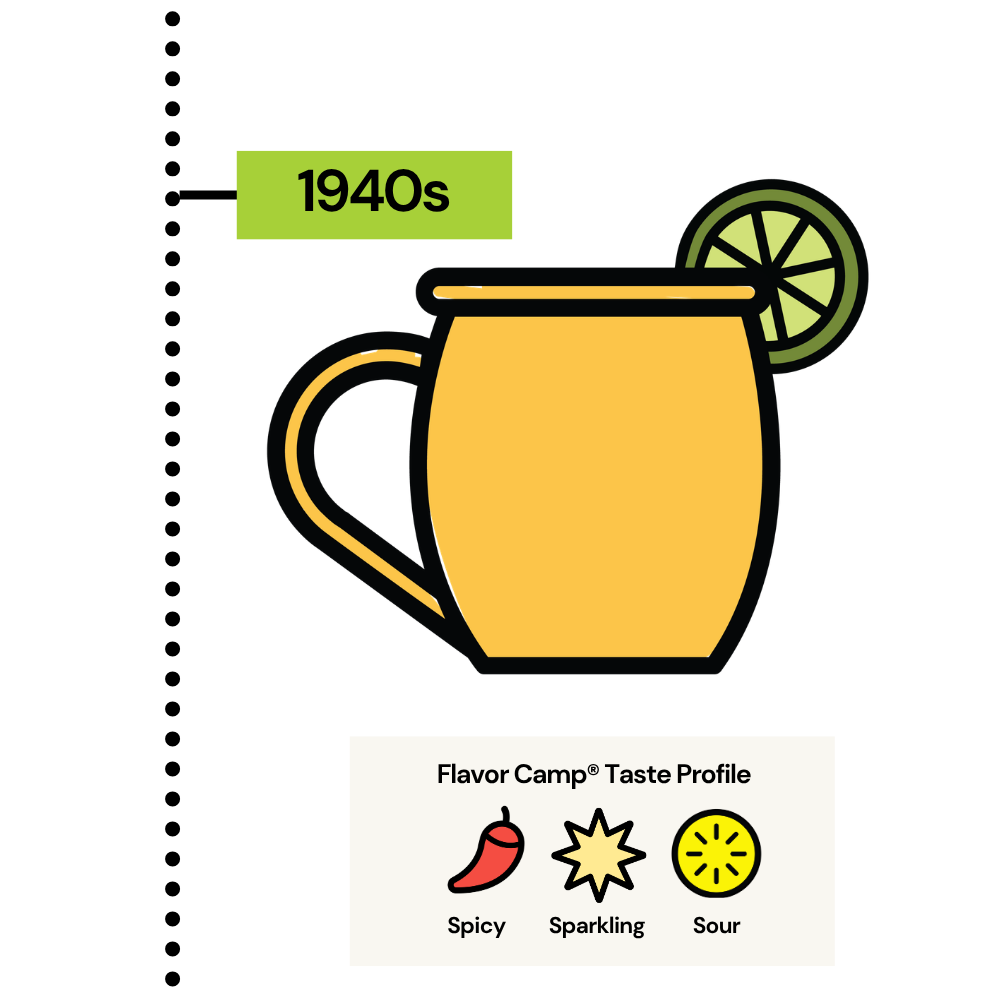
The Moscow Mule, created in Los Angeles in the early 1940s, exemplifies how a cocktail can become a powerful marketing tool for a spirit. At the time, vodka was not popular in North America, but the Moscow Mule helped launch it into the mainstream. Its signature copper mug gave bartenders and consumers an instantly recognizable, photogenic vessel, turning the drink itself into an advertisement. The cocktail embodies postwar optimism: it is cold, fizzy, refreshing, and wonderfully simple. The rise of cultural marketing, increased interest in vodka, and the commercialization of cocktails all converge in the Moscow Mule’s legacy.
Recipe:
2.0 oz vodka
0.5 oz fresh lime juice
3.0-4.0 oz ginger beer
garnish: lime wheel
Build directly in a copper mule mug over ice. Stir gently & garnish.
mai tai
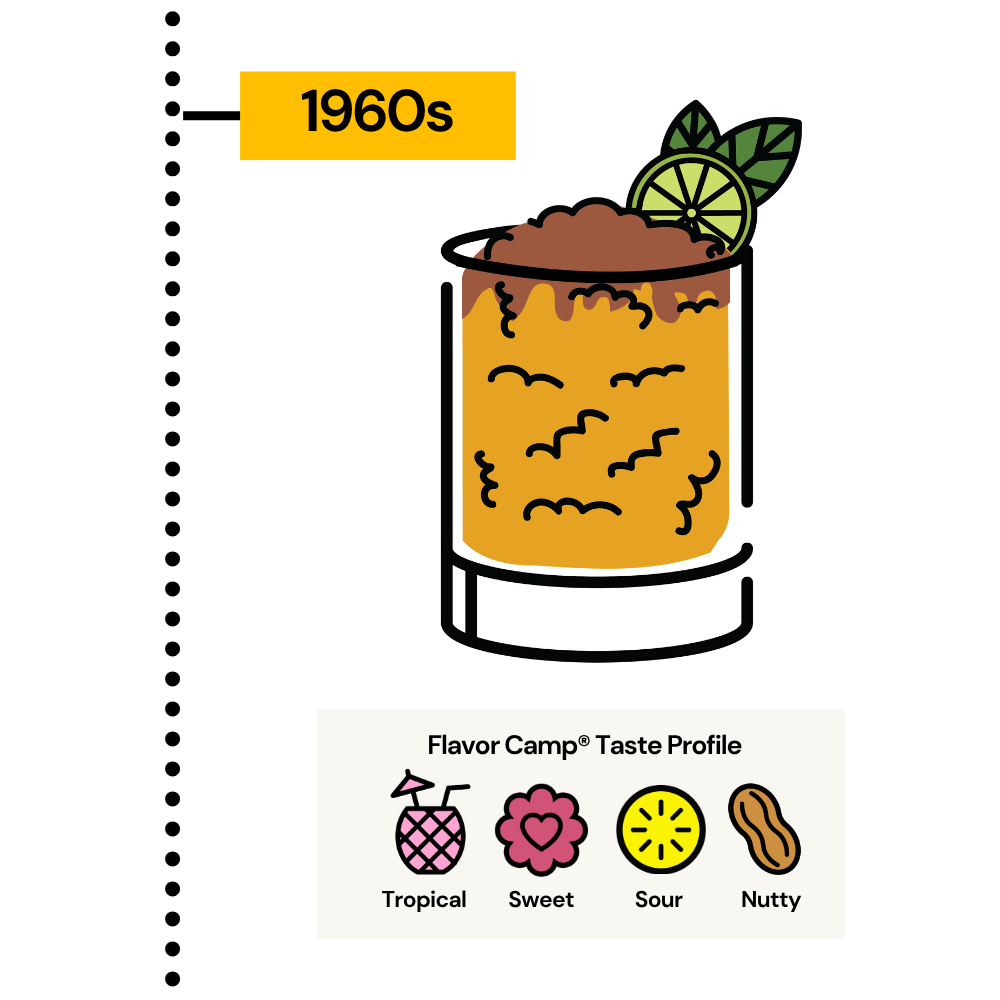
Victor Bergeron, better known as Trader Vic, created the Mai Tai in 1944. The cocktail quickly became a symbol of the tiki craze that swept through the 1950s and 1960s. Tiki bars offered immersive escapes, Polynesian-inspired motifs, and inventive tropical drinks served in distinctive glassware. As the Mai Tai’s fame grew, its original character was lost in mass-market renditions, which overloaded the drink with fruit juice and sugar.
Recipe:
1.5 oz light rum
0.5 oz dark rum
0.5 oz orange liqueur
0.5 oz orgeat
1.0 oz fresh lime juice
garnish: lime & mint
Combine all ingredients except the dark rum in a shaker with crushed ice. Shake briefly. Dump contents into the glass. Top with crushed ice, float dark rum over drink & garnish.
tequila sunrise
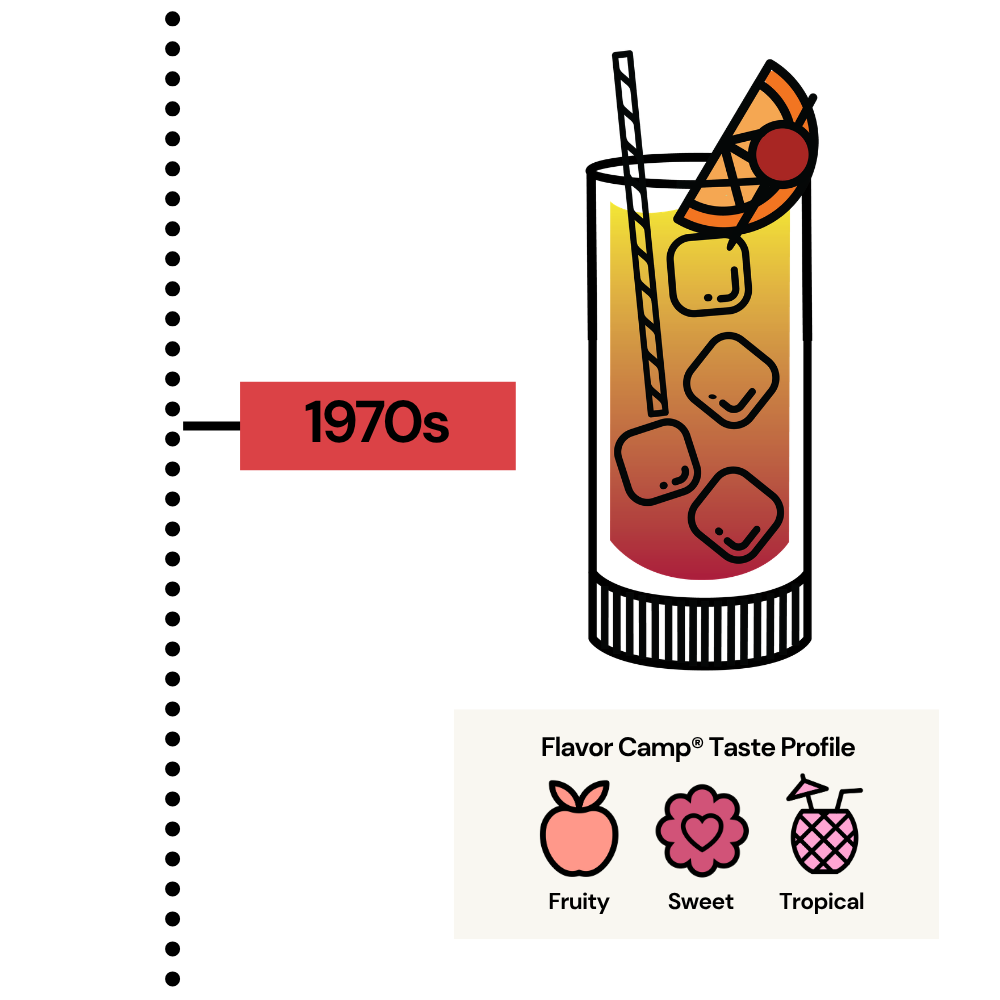
Few cocktails capture the 1970s as vividly as the Tequila Sunrise. Created by Bobby Lozoff and Billy Rice at Sausalito’s countercultural Trident, the modern combination of tequila, orange juice and grenadine found fame after the Rolling Stones adopted it during their 1972 American tour. José Cuervo printed the recipe on its bottles, while the Eagles immortalized its name in song. With its dramatic gradient and easygoing sweetness, the drink followed the decade’s journey from California counterculture to international pop culture.
Recipe:
2.0 oz tequila
4.0 oz orange juice
0.5 oz grenadine
garnish: orange slice & cherry
Build directly in a glass over ice adding the grenadine last. Mix gently to create the sunrise.
long island iced tea
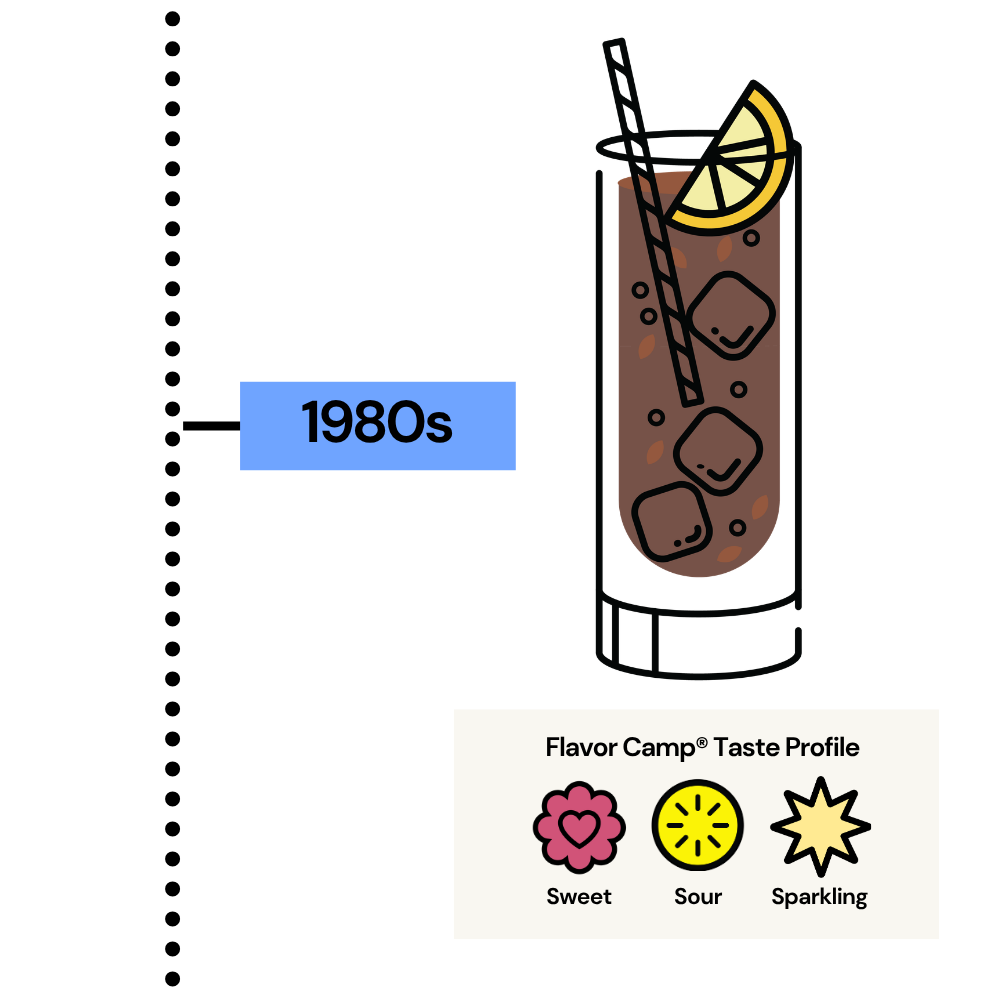
The Long Island Iced Tea perfectly embodies the excess of 1980s drinking culture: more spirits, more alcohol, and a “more is more” mentality. Despite its name, no tea is involved; the cola simply lends a tea-like hue. As a cocktail, it provides a vivid contrast to the Martini: where the Martini signals restraint and sophistication, the Long Island Iced Tea revels in extravagance and indulgence. This drink sums up the decade: bold flavours, oversized portions, energetic nightlife, and the triumph of quantity over subtlety.
Recipe:
0.5 oz vodka
0.5 oz gin
0.5 oz white rum
0.5 oz blanco tequila
0.5 oz triple sec
0.75 oz fresh lemon juice
0.5 oz simple syrup
cola (to top)
garnish: lemon wedge
Build directly in a tall glass over ice. Stir gently to incorporate before garnishing.
cosmopolitan
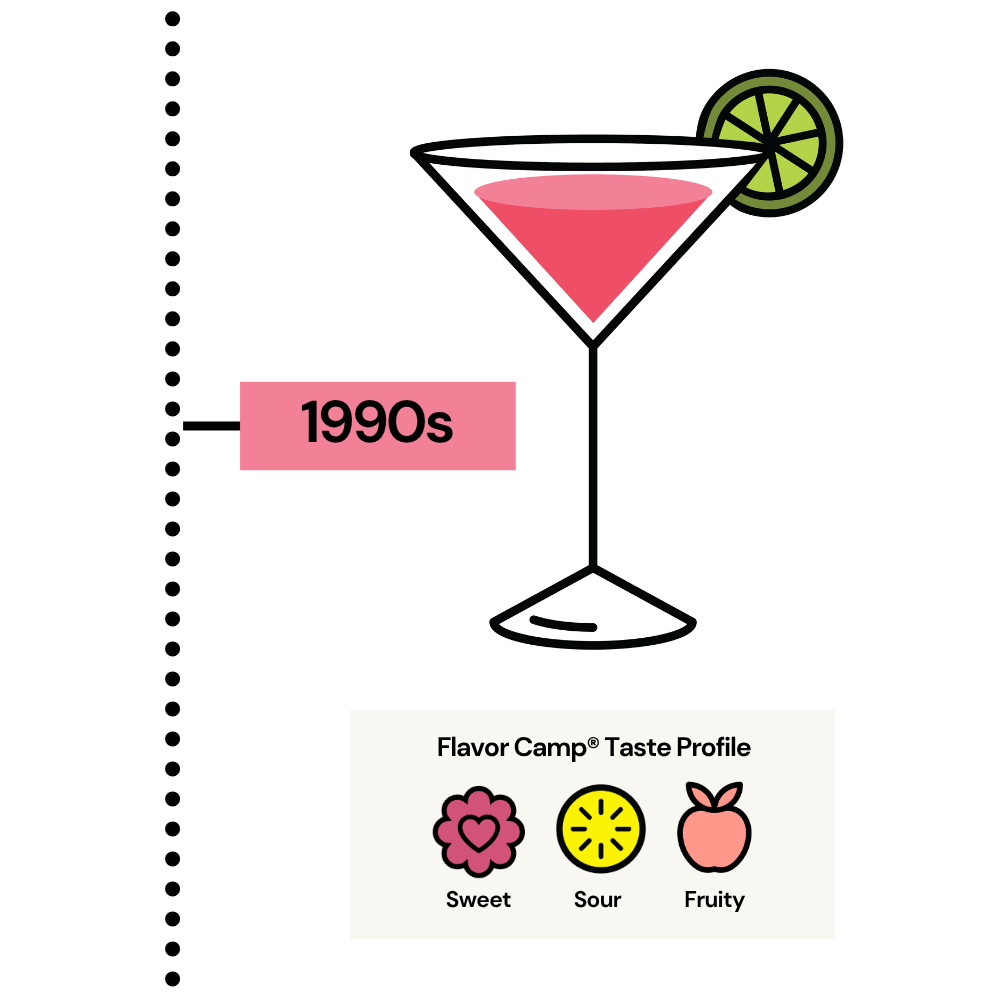
The Cosmopolitan originated before the 1990s, but it became a true cultural phenomenon during this decade. Its vibrant pink hue, served in an elegant stemmed glass, and approachable flavour profile made it instantly iconic. The popularity of Sex and the City further elevated the Cosmo, turning it from a fashionable drink into a true pop-culture symbol. The Cosmo stands out because it marked the cocktail’s return as a statement of personal identity: what you ordered reflected who you were.
Recipe:
1.5 oz (citron) vodka
0.75 oz orange liqueur
0.75 oz cranberry juice
0.5 oz fresh lime juice
garnish: lime wedge/wheel
Shake all ingredients with ice. Fine strain into a chilled coupe/martini glass & garnish.
appletini
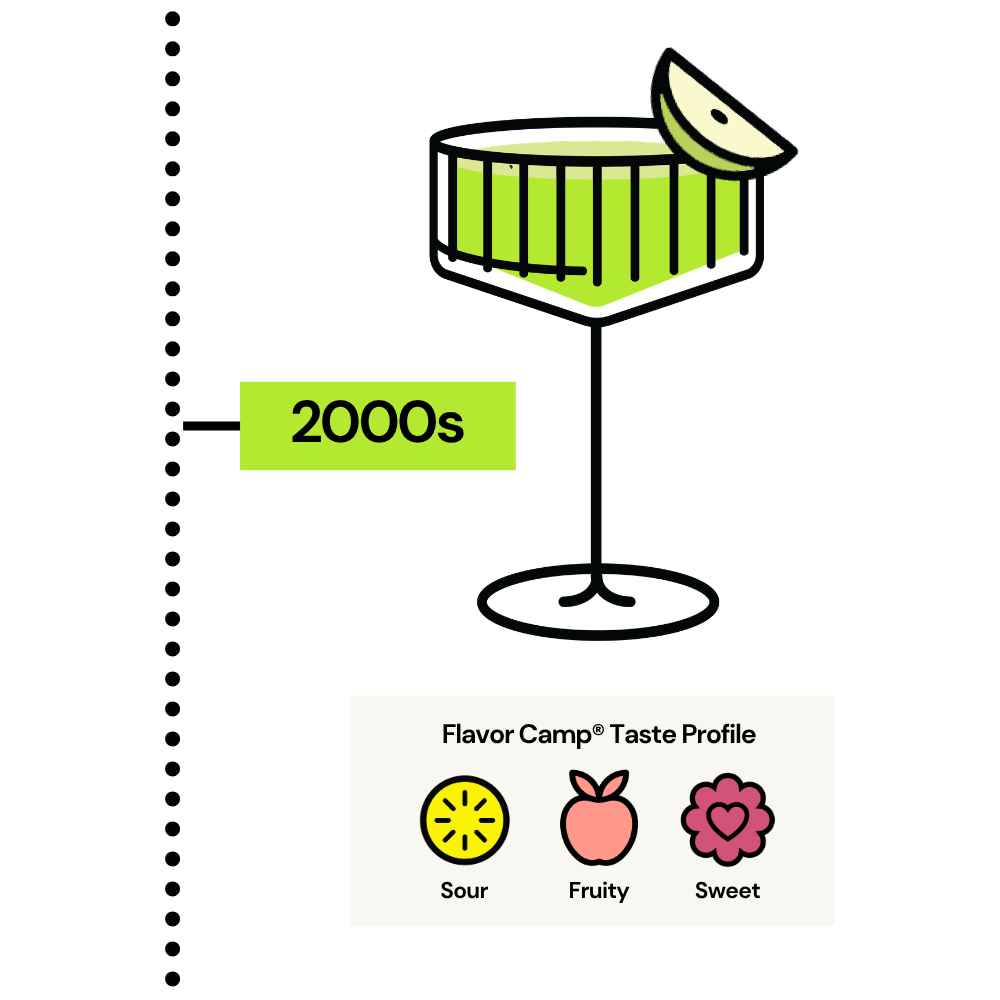
The Appletini perfectly captures the spirit of the 2000s, marking a turning point in drinking culture: cocktails were back in style, yet the craft-cocktail movement had not fully arrived. At Lola’s in West Hollywood, bartender Adam Karsten invented the Appletini in the mid-1990s, initially calling it the Adam’s Apple before the catchy name Appletini stuck. The drink addressed a question traditional cocktails overlooked: how could someone enjoy the social ritual of a cocktail bar without actually liking the taste of liquor? Its vibrant green colour became part of its appeal, along with its almost Jolly Rancher-like flavour.
Recipe:
1.5 oz vodka
1.5 oz sour apple schnapps
0.5 oz fresh lime juice
garnish: apple slice or cherry
Shake with ice. Fine strain into a chilled martini glass & garnish.
old fashioned
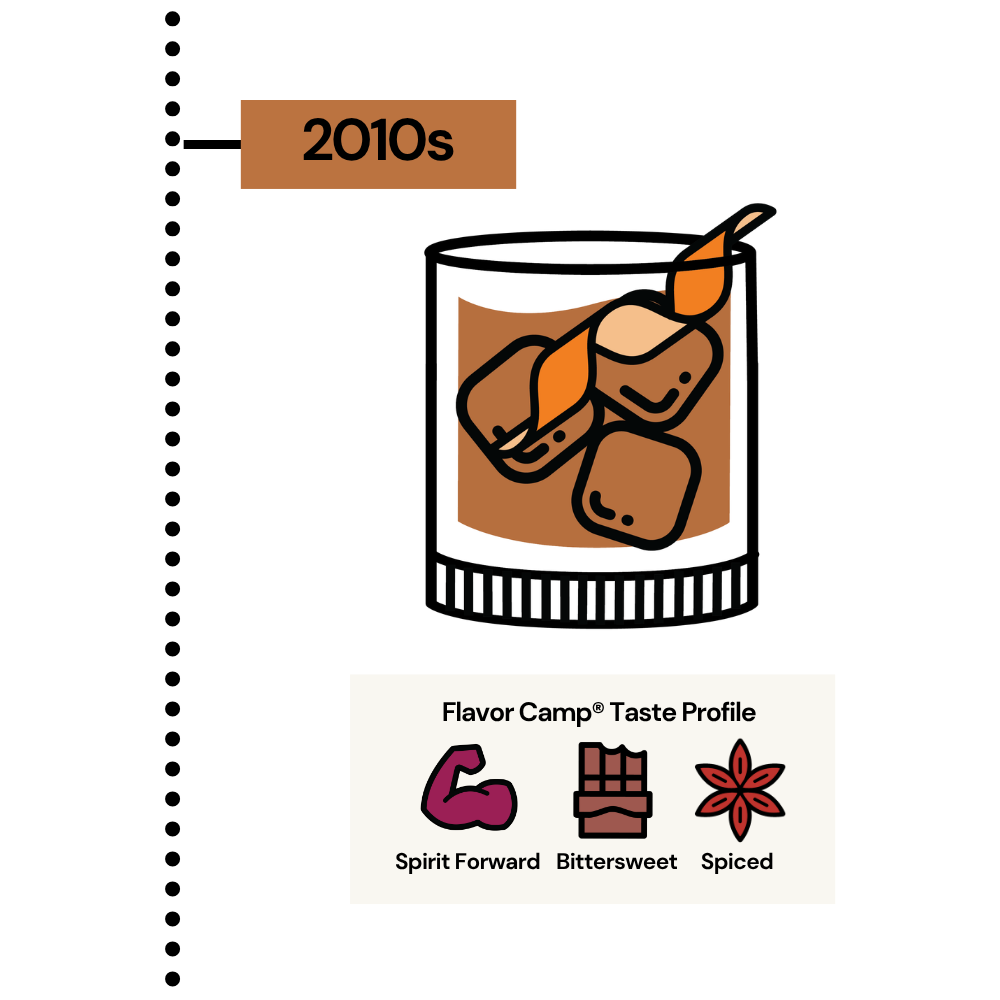
The Old Fashioned stands as the clearest symbol of the craft-cocktail renaissance. Instead of inventing ever more complicated drinks, bartenders looked to the past. They revived forgotten recipes, rediscovered obscure spirits, and practiced historical techniques rooted in classic cocktail structures. The Old Fashioned surged in popularity because it perfectly embodied the movement’s philosophy: fewer ingredients, better-quality spirits and refined technique. Its revival was further fueled by Mad Men, where Don Draper’s preference for Old Fashioneds added a nostalgic allure.
Recipe:
2.0 oz whisk(e)y
⅓ oz demerara syrup (or 1 sugar cube)
2-3 dashes aromatic bitters
garnish: orange twist
Stir ingredients in a mixing glass with ice. Strain into a rocks glass over fresh ice & garnish.
espresso martini
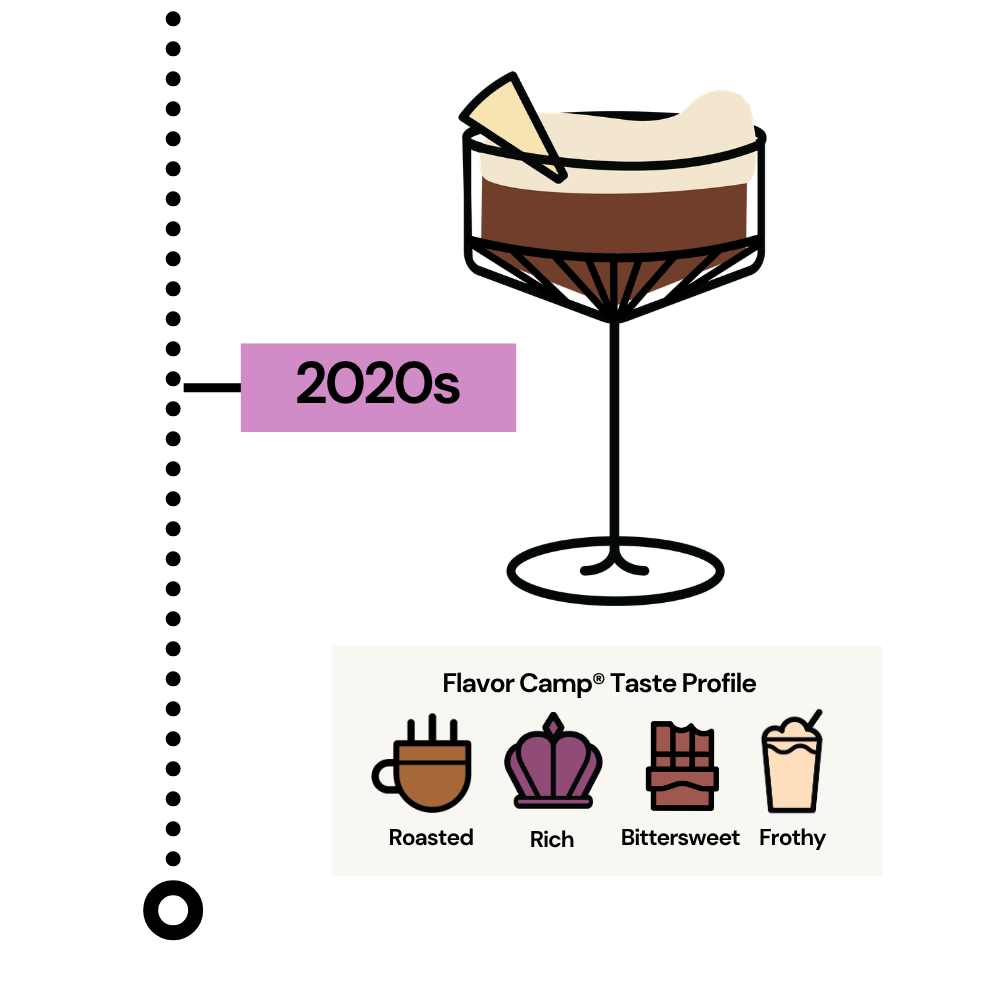
Though we are only halfway through the decade, the Espresso Martini has already made a mark. While Dick Bradsell originally created it in London in the 1980s, its dramatic resurgence has cemented its place as an icon of our current era. The drink embodies a range of contemporary trends: the enthusiasm for coffee culture, a longing for nostalgia, the balance of sweet and bitter flavours, and the appeal of cocktails made for sharing on social media. Its revival and the riffs it has inspired, from adding Parmigiano to serving it frozen as a granita, underscore a defining aspect of modern cocktail culture: making the familiar feel surprising again.
Recipe:
2.0 oz vodka
0.5 oz coffee liqueur
0.5 oz simple syrup
1.0 oz espresso
garnish: three coffee beans (or parmesan if you’re living in 2023)
Shake with ice. Fine strain into a chilled martini glass & garnish.
Leave a Reply